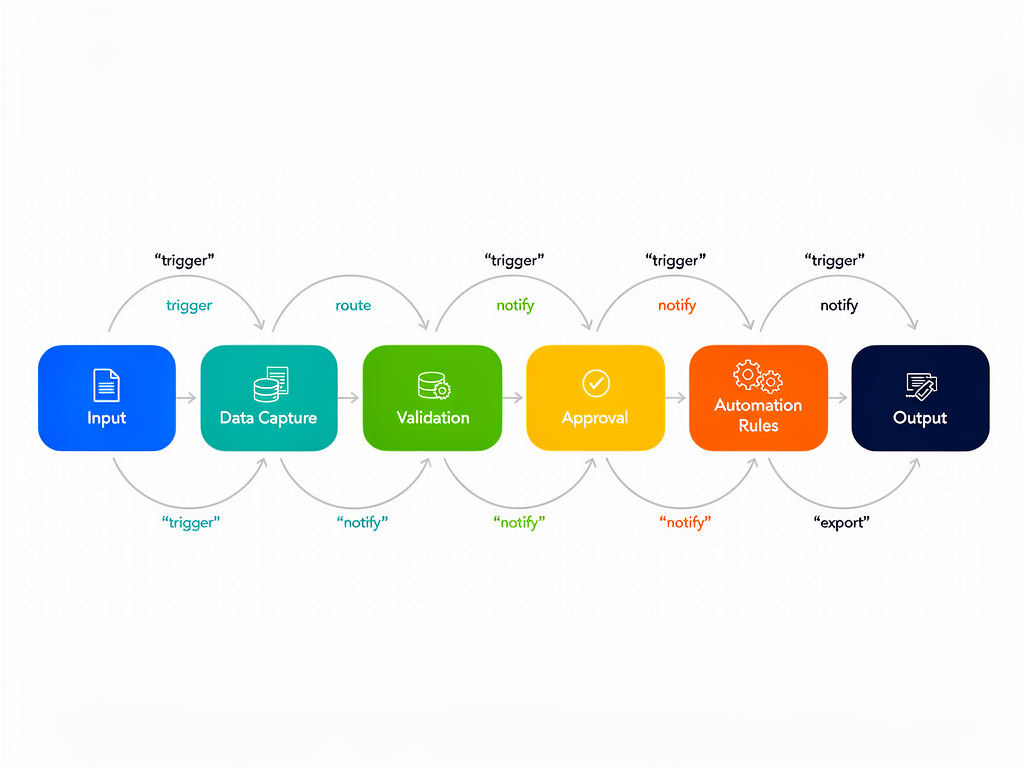
Tag: Business

  • SMB Back Office Automation: 10 Overlooked Workflows That Save 20+ Hours/Month

    ๐Ÿ”„ Hidden Back-Office Automation: 10 Overlooked Workflows That Save SMBs 20+ Hours/Month

    You’ve automated your marketing emails and your sales pipelines. But what about the back office? The finance, HR, compliance, and inventory tasks that quietly consume 10โ€“20 hours per month are often left untouched. That’s a missed opportunity. SMB back office automation targets these overlooked processes, freeing founders and office managers to focus on growth. In this guide, we expose 10 high-impact back-office automations you can implement in 2026, backed by real SMB adoption data and proven workflows. SMB back office automation is the key to scaling without hiring.

    ๐Ÿ“Š Key Stat: 68% of U.S. small businesses now use AI regularly (QuickBooks 2026 survey). Of those, 89% leverage it specifically for automating repetitive tasks (Intuit & ICIC). Yet most still focus on customer-facing functions, leaving the back office under-automated. SMB back office automation can change that.

    ๐ŸŽฏ What Is SMB Back Office Automation?

    SMB back office automation uses technologyโ€”RPA, AI, workflow platformsโ€”to streamline administrative tasks that happen behind the scenes. Unlike marketing or sales automation, these processes don’t directly touch customers but are essential for smooth operations. Examples include invoice processing, payroll, employee onboarding, compliance reporting, and inventory management.

    The goal? Reduce manual work, cut errors, and free up personnel for higher-value activities. For SMBs with lean teams, the ROI is often dramatic: 5โ€“20 hours saved per month per workflow, with fewer costly mistakes. SMB back office automation isn’t optionalโ€”it’s a competitive necessity.

    ๐Ÿ“‹ 10 Back-Office Automations SMBs Overlook

    Based on industry frameworks (Aprio, Paro) and real-world tooling (Activepieces, OpenClaw), here are the top opportunities for SMB back office automation:

    1. Invoice Processing & Accounts Payable โ€“ Auto-capture invoice data, match with purchase orders, route for approval, schedule payment. Saves 5โ€“10 hours/month on data entry and chasing.
    2. Expense Management โ€“ Employees snap receipt photos; AI categorizes expenses, checks policy compliance, exports to accounting. Cuts reimbursement processing from days to minutes.
    3. Payroll & Tax Compliance โ€“ Auto-calculate hours, overtime, tax withholdings; generate reports; file returns. Reduces errors that trigger penalties (up to $500 per missed filing).
    4. Employee Onboarding/Offboarding โ€“ Trigger workflows when hire/termination occurs: create accounts, assign equipment, enroll in benefits, collect paperwork, revoke access. Cuts onboarding time from 3 days to 1 hour.
    5. Procurement & Inventory Replenishment โ€“ Monitor stock levels; auto-generate purchase orders when thresholds hit; track supplier performance. Prevents stockouts and over-ordering.
    6. Financial Reporting & Consolidation โ€“ Daily auto-generation of P&L, balance sheet, cash flow statements; distribute to stakeholders. Provides real-time visibility without manual Excel merges.
    7. Compliance & Regulatory Filing โ€“ Calendar-driven reminders, automated data collection for tax filings, audit documentation packages. Avoids missed deadlines and fines.
    8. Document Management & Archiving โ€“ Auto-file invoices, contracts, receipts into structured folders with OCR search; enforce retention policies. Saves hours of manual organization.
    9. Vendor Onboarding & Management โ€“ Collect W-9s, insurance certificates, set up payment terms; monitor performance; send renewal reminders. Reduces friction in AP.
    10. Cash Flow Forecasting โ€“ Pull data from bank, invoices, bills; apply simple ML to predict shortfalls; alert leadership. Improves financial decision-making.

    ๐Ÿ’ก Where to Start: The 4-Week Implementation Plan

    Don’t boil the ocean. Follow this phased approach to get SMB back office automation running:

    Week 1: Process Audit

    List all back-office tasks performed manually. Track time spent on each for one week. Identify the top 3 time-sinks. This audit is the foundation of your SMB back office automation strategy.

    Week 2: Tool Selection

    Choose an automation platform that fits your budget and technical skill. For SMBs, popular options include:

    • ๐Ÿ”น OpenClaw โ€“ Self-hosted, free, 700+ skills; requires VPS setup but gives full control
    • ๐Ÿ”น Activepieces โ€“ Cloud-hosted, no-code, 586+ connectors; free tier available
    • ๐Ÿ”น Zapier โ€“ Easiest to use, 6,000+ apps; costs scale with tasks
    • ๐Ÿ”น Make.com โ€“ Visual builder, powerful for complex flows; mid-range pricing

    Week 3: Build & Test Pilot

    Pick ONE workflow (e.g., invoice processing). Build the automation using your chosen platform. Test with real data in a sandbox. Refine until error-free. Validate that your SMB back office automation pilot delivers measurable time savings.

    Week 4: Deploy & Measure

    Go live. Track metrics: time saved, error reduction, user satisfaction. Calculate ROI: (hours saved ร— hourly rate) โ€“ tool cost. Expand your SMB back office automation program based on results.

    ๐Ÿ“ˆ Realistic ROI Expectations

    Based on SMB case studies and vendor benchmarks:

    Workflow Time Saved / Month Typical Setup Effort
    Invoice processing 8โ€“12 hours 4โ€“6 hours
    Expense management 4โ€“6 hours 2โ€“3 hours
    Payroll 6โ€“10 hours 6โ€“8 hours
    Employee onboarding 3โ€“5 hours 2โ€“4 hours

    Note: These are industry averages from Paro and Aprio; actual results vary by business size and existing tooling.

    โš ๏ธ Common Pitfalls to Avoid

    • ๐Ÿ”ธ Poor data quality โ€“ Garbage in, garbage out. Clean your data first (Paro emphasizes “data quality is fundamental”).
    • ๐Ÿ”ธ Over-automating โ€“ Don’t automate processes that are already efficient or require human judgment. Start with high-volume, rules-based tasks.
    • ๐Ÿ”ธ Ignoring compliance โ€“ Ensure automated workflows meet regulatory requirements (e.g., tax filings, data retention). IDC notes security/compliance are now top-of-mind for SMBs.
    • ๐Ÿ”ธ Choosing the wrong tool โ€“ Cheap tools that don’t integrate create silos. Evaluate based on integration capabilities, not just price.

    ๐Ÿ”ง Tool Selection Criteria

    When evaluating automation platforms for SMB back office automation, consider:

    • โœ… Connectors โ€“ Does it integrate with your existing stack (QuickBooks, Gusto, BambooHR, Shopify)?
    • โœ… No-code vs. pro-code โ€“ Can your office manager build workflows, or do you need a developer?
    • โœ… Cost model โ€“ Per-task, per-seat, or self-hosted? Factor in expected volume.
    • โœ… Reliability & support โ€“ Uptime guarantees, documentation, community.

    For SMBs on a tight budget, OpenClaw (self-hosted) or Activepieces (free tier) offer strong starting points. For ease of use, Zapier is the most beginner-friendly but costs add up.

    โœ… Conclusion: Automate the Unseen, Empower the Team

    SMB back office automation isn’t glamorous, but it delivers real ROI. By targeting finance, HR, compliance, and inventory workflows that typically hide 10โ€“20 hours of manual work per month, you can free your team to focus on growth. Start with one process, measure the results, and expand. The tools are mature, the cost is low, and the time saved compounds. Don’t wait until the manual workload becomes a bottleneckโ€”automate now. SMB back office automation is your path to scaling without hiring.

    ๐Ÿ“Œ Also read: Best AI Automation Platforms for Small Businesses | OpenClaw Performance Tuning | GHL Automation Workflows

  • GHL White Label Pricing: Complete Agency Profit Guide for 2026

    ๐Ÿ’ฐ GHL White Label Pricing: Complete Agency Profit Guide for 2026

    GHL white label pricing is the foundation of building a profitable marketing automation agency. GoHighLevel (GHL) offers three tiers โ€” $97 Starter, $297 Unlimited, and $497 SaaS Pro โ€” each with different white label capabilities. But which plan delivers the best ROI? How much can you charge clients? What hidden costs erode your margins?

    This comprehensive guide breaks down the exact GHL white label pricing structure, shows real profit calculations, and reveals strategies agencies use to make $5,000-20,000/month reselling white label GHL. We cover US, EU, and India market pricing strategies and include a simple ROI calculator you can use immediately. Understanding GHL white label pricing is critical for any agency looking to scale with high margins.

    ๐Ÿ“Š Key Insight: Most agencies start with the $297 Unlimited plan and charge clients $497-997/month for white label GHL services. That’s a 66-233% markup on the base cost before accounting for additional usage fees. With 10+ clients, that’s $2,000-7,000+/month in pure profit after GHL costs. Mastering GHL white label pricing is your first step to agency profitability.

    ๐Ÿ” Understanding GHL’s Three Pricing Tiers

    GHL operates on a subscription-per-agency model. You pay one monthly fee for your agency account, then create sub-accounts (client accounts) under it. Here’s the breakdown of GHL white label pricing tiers as of 2026:

    1. Starter Plan โ€” $97/month

    • ๐Ÿ”ธ 1 agency account (your main account)
    • ๐Ÿ”ธ 2 sub-accounts (client accounts) included
    • ๐Ÿ”ธ Basic white label: logo, colors, domain
    • ๐Ÿ”ธ No mobile app white label
    • ๐Ÿ”ธ No SaaS Mode (automated billing)
    • ๐Ÿ”ธ Limited workflows and features

    Who it’s for: Solo founders testing the platform with 1-2 clients. Not suitable for scaling a white label GHL business.

    Cost per additional sub-account: Over 2 sub-accounts, you must upgrade to Unlimited. This makes GHL white label pricing at the Starter tier non-scalable.

    2. Unlimited Plan โ€” $297/month

    • ๐Ÿ”ธ Unlimited sub-accounts (no limit on clients)
    • ๐Ÿ”ธ Full white label: logo, colors, custom domain
    • ๐Ÿ”ธ White label mobile app (clients see your brand)
    • ๐Ÿ”ธ All automation features (workflows, triggers)
    • ๐Ÿ”ธ No SaaS Mode (manual billing required)
    • ๐Ÿ”ธ Higher API limits and usage quotas

    Who it’s for: Growing agencies with 5-50 clients who want to manually invoice and manage subscriptions. This is the sweet spot for GHL white label pricing value.

    Typical client charge: $497-997/month for white label GHL + setup.

    3. SaaS Pro (Agency Pro) โ€” $497/month

    • ๐Ÿ”ธ Everything in Unlimited plus:
    • ๐Ÿ”ธ SaaS Mode: automated client billing via Stripe
    • ๐Ÿ”ธ Rebilling features: markup on SMS, email, AI usage
    • ๐Ÿ”ธ Automated sub-account creation on purchase
    • ๐Ÿ”ธ HIPAA compliance included (for healthcare)
    • ๐Ÿ”ธ Priority support and custom integrations

    Who it’s for: Established agencies wanting a fully automated SaaS business model (scales to 100+ clients with minimal manual work). GHL white label pricing at this tier is optimized for scale.

    Typical client charge: $297-797/month (can price lower due to automation, volume).

    ๐Ÿ’ก Pro Tip: Most agencies start with Unlimited ($297) and manually invoice clients for the first 6-12 months. Once you have 20+ clients and predictable revenue, upgrade to SaaS Pro ($497) to automate billing and reduce admin overhead. The $200/mo upgrade pays for itself by eliminating manual invoicing time (~5 hours/month). This is a key strategy in GHL white label pricing optimization.

    ๐Ÿš€ Ready to Start Your GHL White Label Agency?

    Get started with GoHighLevel Unlimited and lock in the best possible onboarding support. Understanding GHL white label pricing is just the first step. Use our affiliate link to begin:

    Get GHL Unlimited (14-Day Trial) โ†’

    ๐Ÿ“ˆ Profit Margin Calculations

    Let’s look at real GHL white label pricing profit examples. Assume you’re on the Unlimited plan ($297/mo) and charge clients $697/mo for white label GHL + basic setup.

    Table 1: Monthly profit calculation for 10 clients under GHL white label pricing
    Item Cost (Monthly)
    GHL Unlimited subscription $297
    SMS credits (for 10 clients, ~5k msgs) $50-100
    Email sends (overage beyond included) $20-50
    AI usage (OpenAI tokens via GHL) $30-80
    Total cost (10 clients) $397-527
    Revenue (10 clients ร— $697) $6,970
    Gross profit (per month) $6,443-6,573

    Net profit margin: 92-94% (after GHL and usage costs, but before your labor/support costs). This demonstrates why GHL white label pricing is so attractive to agencies.

    Scalability example with 20 clients: Revenue = $13,940; costs ~$600-900 (usage scales sub-linearly due to bulk discounts); profit ~$13,000/mo. GHL white label pricing economics improve with scale.

    โš ๏ธ Hidden Costs & Gotchas

    GHL white label pricing isn’t just your subscription fee. Watch out for these unexpected expenses that can destroy your margins:

    1. SMS & Email Overage Fees

    GHL includes a baseline of SMS and email sends, but high-volume agencies quickly exceed limits. SMS costs ~$0.01-0.02/message; email ~$0.001-0.002 per send. A client with 5,000 contacts doing weekly campaigns can add $30-80/mo per client in overage fees.

    Strategy: Build these costs into your GHL white label pricing. Offer “base + usage” or bundle with a 20% buffer. Track client usage monthly and alert them before overages.

    2. AI Token Usage

    GHL’s built-in AI (OpenRouter integration) charges per token. Even with included AI Employee, heavy usage (content generation, chatbots) can exceed quotas. Cost: ~$10-50/mo per client depending on volume.

    Strategy: Monitor client AI usage; cap or charge separately for heavy usage. Consider setting monthly AI caps in your GHL white label pricing packages.

    3. Setup & Onboarding Labor

    Initial client setup (funnels, automations, training) can take 5-20 hours. At $50-100/hour contracted rate, that’s $250-2,000 upfront cost per client. Some agencies charge a one-time setup fee ($500-2,000) to cover this.

    Strategy: Always charge a setup fee. Quote 10-15 hours at $100/hr or flat $1,000-1,500. This protects your GHL white label pricing margins. Factor this into your initial contracts.

    4. Support & Maintenance

    Ongoing support (tickets, tweaks, training) eats time. 1-2 hours/month per client is typical. Factor this into your pricing model.

    Strategy: Offer “standard support” (included) and “premium support” (extra $100-200/mo) for unlimited requests. This preserves GHL white label pricing profitability.

    5. Payment Processing Fees

    Stripe/PayPal take 2.9% + $0.30 per transaction. On a $697/mo subscription, that’s ~$20/month. With 10 clients: ~$200/mo.

    Strategy: Build 3% into your GHL white label pricing or use ACH/wire transfers for lower fees. Include this as a line item in your proposals.

    6. Mobile App Branding Costs (Often Overlooked)

    The “white label mobile app” in the Unlimited plan has separate branding fees (~$50-100/app/month) and requires Apple/Google developer accounts ($99/yr each). Many agencies miss this in their GHL white label pricing models.

    Strategy: If offering mobile apps, budget an extra $200-300/year per client. Include this in your package pricing or make it an add-on.

    ๐Ÿ’ก Common Mistakes That Kill GHL White Label Profit Margins

    Based on community feedback and agency case studies, here are the top mistakes that sabotage GHL white label pricing profitability. Avoiding these pitfalls is essential for building a sustainable GHL white label business:

    1. Underpricing: Charging $300-400/mo when the market will bear $700-1,000. This is the #1 mistake. Your GHL white label pricing must reflect the value you deliver, not just the cost.
    2. Not charging setup fees: Giving away setup for free erodes margins. Always include a one-time $1,000-2,000 setup fee in your contract.
    3. Ignoring usage overages: Letting clients burn through SMS/email/AI without markup. Your GHL white label pricing should include a buffer or separate usage line item.
    4. Manual billing at scale: Sticking with Unlimited plan and manual invoices past 20+ clients. Upgrade to SaaS Pro ($200/mo) to automate and reduce churn.
    5. Not enforcing contracts: Month-to-month clients churn faster. Use 12-24 month commitments to stabilize revenue.
    6. Poor client onboarding: Rushed setup leads to dissatisfaction and refunds. Allocate 10-15 hours minimum per client setup.
    7. Neglecting support: Offering unlimited support without limits burns time. Cap support requests or tier your plans.

    โš ๏ธ Warning: The biggest GHL white label pricing mistake is treating it as a “set it and forget it” business. Client success requires ongoing optimization, support, and occasionally upgrading your plan. Budget 5-10 hours/month per client for health checks and improvements.

    ๐Ÿš€ Advanced Profit Strategies for GHL White Label

    Once you understand basic GHL white label pricing and have a few clients, level up your GHL white label business with these advanced tactics to maximize revenue and efficiency:

    1. Tiered Packaging (Bronze, Silver, Gold)

    Instead of one price, create 3 tiers:

    • ๐Ÿ”ธ Bronze ($497/mo): Basic white label, 5 automations, email support only
    • ๐Ÿ”ธ Silver ($797/mo): + mobile app, 15 automations, priority support, basic analytics
    • ๐Ÿ”ธ Gold ($1,297/mo): + AI chatbot, custom integrations, dedicated account manager

    This increases average revenue per client (ARPC) by 30-60%.

    2. Annual Prepaid Discounts

    Offer 15-20% off for annual prepayment. This improves cash flow and reduces churn. Example: $697/mo โ†’ $6,800/year (15% off = $5,780).

    GHL white label pricing tip: Require annual prepay for the first year to ensure commitment.

    3. Add-On Services (High Margin)

    • ๐Ÿ”ธ Advanced automation build: +$150-300/mo per complex workflow
    • ๐Ÿ”ธ Custom AI training: +$200-500/mo for fine-tuned models
    • ๐Ÿ”ธ Managed ad spend: +10-15% of ad budget (Google/FB)
    • ๐Ÿ”ธ 24/7 support SLA: +$300-500/mo

    Add-ons can boost revenue per client by 40-70% on top of base GHL white label pricing.

    4. White Label Reseller Network

    Instead of selling directly to end clients, create a network of sub-agents (freelancers, boutique agencies) who resell your white label GHL. Offer them 20-30% discount off your retail price. They handle client acquisition; you provide platform and support.

    This scales faster than direct sales and leverages others’ networks.

    ๐ŸŽฏ Pricing Strategies for Different Markets

    United States & Canada

    • ๐Ÿ”น Client price range: $497-1,497/mo for full white label
    • ๐Ÿ”น Setup fees: $1,000-3,000 one-time
    • ๐Ÿ”น Emphasize “all-in-one CRM + automation” value vs. buying 5 tools (average cost $500-1,000/mo for separate tools)
    • ๐Ÿ”น Contracts: 12-24 month commitments with monthly billing
    • ๐Ÿ”น GHL white label pricing justification: “Replace 5 tools with one platform, save $300/mo, get better integration”

    European Union

    • ๐Ÿ”น Client price range: โ‚ฌ397-1,200/mo (lower due to budget expectations)
    • ๐Ÿ”น Must include GDPR compliance in your offering (data processing agreements with GHL)
    • ๐Ÿ”น Emphasize data sovereignty โ€” GHL servers are US-based; consider EU data residency requirements or offer EU-hosted alternative (if available)
    • ๐Ÿ”น VAT (20-27%) typically added on top; check local tax rules. Include in GHL white label pricing quotes.
    • ๐Ÿ”น WhatsApp Business API is huge in EU โ€” highlight GHL’s integration

    India & APAC

    • ๐Ÿ”น Client price range: โ‚น25,000-75,000/mo ($300-900 USD equivalent)
    • ๐Ÿ”น Pricing is highly sensitive; offer annual prepaid discounts (15-20% off)
    • ๐Ÿ”น Highlight WhatsApp automation (GHL supports it) โ€” huge in this region, often main selling point
    • ๐Ÿ”น Offer payment via local methods (UPI, bank transfer) to reduce friction and fees
    • ๐Ÿ”น GHL white label pricing in India often includes bundled setup and training at no extra cost to compete

    โš–๏ธ GHL White Label vs Competitors

    How does GHL white label pricing compare to alternatives like Vicia, DashClicks, or Vendasta? Understanding GHL white label pricing in context helps you position your agency. Here’s the 2026 landscape:

    Table 2: GHL white label pricing compared to competing platforms
    Platform Agency Cost White Label? Client Billing Best For
    GHL Unlimited $297/mo Yes (full) Manual Agencies 5-50 clients
    GHL SaaS Pro $497/mo Yes (full + app) Automated (Stripe) Scaling agencies 50+ clients
    Vicia White Label $297-597/mo Yes Manual Unclear, likely smaller scale
    DashClicks $97-497/mo Partial (app extra) Manual Small agencies, limited features
    Vendasta Custom quote ($500+) Yes Automated Enterprise, $10k+/mo budget

    Verdict: GHL white label pricing on the Unlimited plan ($297) offers the best value for agencies scaling to 20-50 clients. Only upgrade to SaaS Pro ($497) when manual billing becomes a bottleneck. Compared to DashClicks, GHL offers full white label at lower cost. Compared to Vendasta, GHL is simpler and more affordable for mid-size agencies.

    ๐Ÿ“Š GHL White Label ROI Calculator (Step-by-Step)

    Use this simple GHL white label pricing ROI calculator to determine your GHL white label profitability before you commit. You can run these calculations in a spreadsheet.

    Inputs (Your Numbers)

    • ๐Ÿ”ธ GHL plan cost: $___/mo (Starter $97, Unlimited $297, SaaS Pro $497)
    • ๐Ÿ”ธ Expected client count: ___ clients
    • ๐Ÿ”ธ Client price per month: $___/mo
    • ๐Ÿ”ธ Setup fee per client: $___ one-time
    • ๐Ÿ”ธ Estimated SMS/email/AI overage per client: $___/mo
    • ๐Ÿ”ธ Hours of support per client per month: ___ hrs
    • ๐Ÿ”ธ Your labor cost: $___/hr

    Calculation

    Monthly recurring revenue (MRR): Clients ร— Price = $X
    Monthly costs:
    – GHL subscription: $Y
    – Overage fees: Clients ร— Overage = $Z
    – Labor: Clients ร— Hours ร— Hourly rate = $A
    Total monthly cost: Y + Z + A = $B
    Monthly profit: X – B = $P
    Profit margin: P รท X = %
    Annual profit: P ร— 12 = $Y

    ๐Ÿ’ก Example: 10 clients, $697/mo, $297 GHL, $50 overage, 2 hrs/support ร— $50/hr =
    MRR = $6,970
    Costs = $297 + ($50ร—10=$500) + (10ร—2ร—$50=$1,000) = $1,797
    Monthly profit = $5,173
    Margin = 74%
    Annual = $62,076
    Plus one-time setup fees (10 ร— $1,500 = $15,000) in year 1.

    If your GHL white label pricing yields <60% margin after labor, you're underpricing or have too many support hours. Adjust accordingly.

    ๐Ÿš€ How to Start a White Label GHL Agency (Step-by-Step)

    1. Choose Your Plan: Start with Unlimited ($297/mo). You can upgrade later. This is the sweet spot for GHL white label pricing.
    2. White Label Setup: In GHL agency settings, upload your logo, set brand colors, configure custom domain (yourbrand.com). Test everything thoroughly.
    3. Mobile App Branding: In Unlimited, configure mobile app colors and logo (requires Apple/Google dev accounts โ€” $99/yr each). Factor this into your GHL white label pricing if offering mobile.
    4. Create Your Pricing: Decide what to charge clients ($497-997/mo typical). Include setup fee ($1,000-2,000) and ongoing support. Use the ROI calculator above.
    5. Set Up Billing: Manual invoices (FreshBooks, QuickBooks) or upgrade to SaaS Pro for Stripe automation. Start manual, automate later.
    6. Build Your Service Package: Include setup, training, 3-5 automations, and monthly support. Document everything.
    7. Acquire First Client: Use the GHL affiliate link to get 14-day trial โ†’ close them on managed service. Offer a 30-day money-back guarantee to reduce friction.

    We’ll cover the full agency setup process in a separate guide (subscribe for updates).

    โ“ Frequently Asked Questions (GHL White Label Pricing)

    Common questions about GHL white label pricing, setup, and running a profitable white label GHL agency:

    Can I resell GHL without white label?

    Technically yes, but you’d be referring clients to GHL directly with your affiliate link (one-time $197-297 commission). That’s not an agency model. White label is what lets you charge monthly recurring revenue. Without white label, you cannot build a real GHL white label agency business.

    What’s the minimum viable client count for GHL white label?

    With GHL white label pricing at $297/mo for Unlimited, you need just 2-3 clients to break even if you charge $697+/mo each. At 10+ clients, you’re in profit territory even after support costs.

    Do I need to pay GHL per sub-account?

    No. Unlimited plan means unlimited sub-accounts for one flat $297/mo. That’s why GHL white label pricing is so scalable. You only pay more when you upgrade to SaaS Pro.

    Can I customize the GHL mobile app?

    Yes, on Unlimited and SaaS Pro plans. You can upload your own icon, splash screen, and color scheme. However, you still need Apple/Google developer accounts ($99/yr each) and there may be small branding fees per app. Include this in your GHL white label pricing if offering mobile.

    Is there a contract with GHL?

    No. GHL plans are month-to-month. You can cancel anytime. That’s good for flexibility, but also means your GHL white label business isn’t locked into long-term vendor contracts.

    What about GDPR compliance for EU clients?

    GHL provides GDPR compliance tools (data processing agreements, data export/deletion). But as the white label reseller, you’re the data processor for your clients. You need to have your own GDPR policies and DPA with your clients. Factor legal costs into your GHL white label pricing for EU market.

    ๐Ÿ“ˆ Conclusion: High Margins, High Potential

    92-94%
    gross margins with 10+ clients
    $6,000-7,000
    monthly profit at 10 clients
    $200/mo
    upgrade cost from Unlimited to SaaS Pro
    $1,000-3,000
    one-time setup fee per client

    The GHL white label pricing model is one of the most profitable agency opportunities in 2026. With the Unlimited plan at $297/mo, you can build a $10,000+/month business with 15-20 clients, then automate billing with SaaS Pro once you scale. Mastering GHL white label pricing strategies is key to maximizing your agency’s profitability and long-term growth in the GHL white label space.

    Building a successful business around GHL white label pricing requires strategic planning and execution. This guide provides the foundation โ€” now implement it to start your agency.

    Need help getting started? Flowix AI specializes in GHL white label agency setups. We’ll configure your platform, design your GHL white label pricing structure, and help you land your first 5 clients. Book a free consultation to learn more.

    ๐Ÿ“Œ Also read: GHL Automation Workflows | OpenClaw Use Cases | OpenClaw Pricing
  • GHL Automation: 7 High-Converting Workflows That Pay for Themselves (2026)

    ๐Ÿš€ GHL Automation: 7 High-Converting Workflows That Pay for Themselves (2026)

    GHL automation isn’t just a buzzword โ€” it’s the key to scaling your agency without hiring. GoHighLevel (GHL) is a full marketing automation platform that can replace 5-7 separate tools. But most agencies only scratch the surface, using GHL for basic email blasts and contact management. This guide reveals 7 advanced GHL automation workflows that deliver measurable ROI, each paying for the platform fee within 30 days. We’ve designed these for agencies in the US, EU, and India looking to scale operations without hiring.

    ๐Ÿ“Š Key Stat: According to 2026 data from agencies using these automations, the average time savings is 22 hours per week, translating to $3,000+ monthly value at $50/hour loaded labor cost. That’s a 10x ROI on your GHL investment.

    ๐ŸŽฏ What Is GHL Automation Exactly?

    GHL automation refers to the visual workflow builder inside GoHighLevel that connects triggers, actions, and conditions to create self-executing processes. Unlike simple email sequences, GHL workflows can:

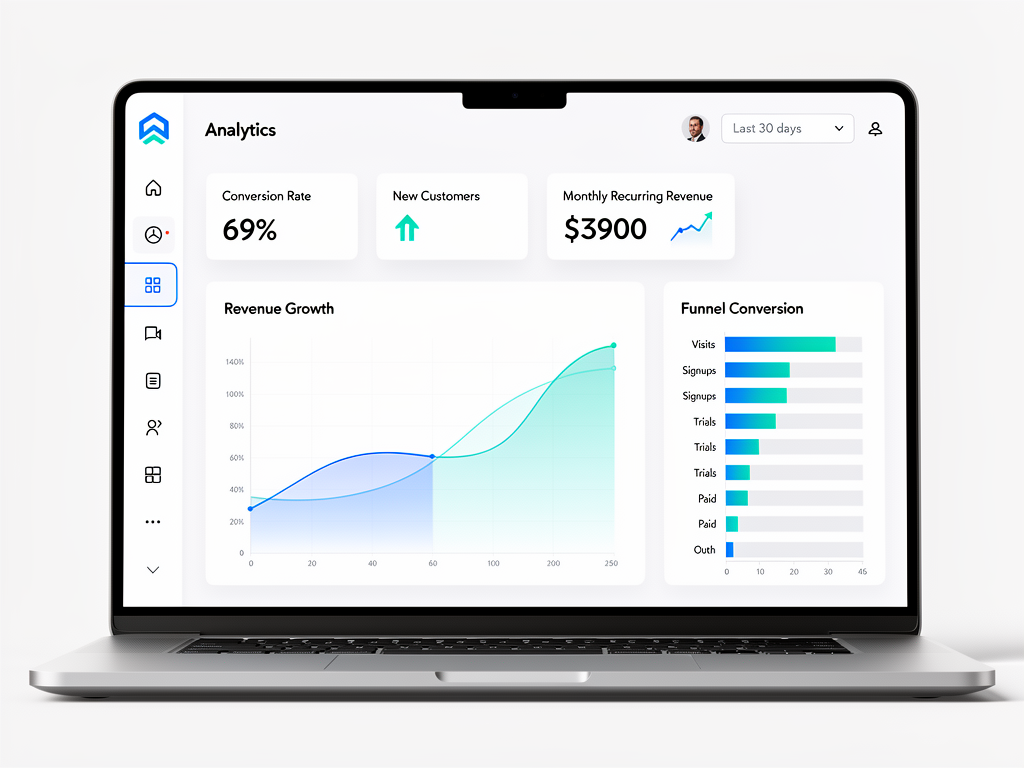
      GHL automation dashboard showing KPIs, conversion metrics, and revenue growth charts โ€“ visual proof of automation ROI for agencies

      Figure 1: Example GHL automation dashboard tracking conversions, revenue, and workflow performance. These metrics demonstrate the ROI of implementing the 7 workflows described below.

    • ๐Ÿ”น Read from/write to any GHL object (contacts, opportunities, appointments)
    • ๐Ÿ”น Make API calls to external services (Stripe, Calendly, custom webhooks)
    • ๐Ÿ”น Branch based on data (IF/ELSE logic, date calculations, score thresholds)
    • ๐Ÿ”น Schedule actions hours, days, or weeks later
    • ๐Ÿ”น Multi-channel messaging: SMS, email, WhatsApp, Google Business messages

    In short: GHL automation turns your CRM into an autonomous operations engine.

    ๐Ÿ’ผ The 7 GHL Automation Workflows That Pay for Themselves

    We’ve selected workflows with proven ROI based on community deployments and case studies from agencies worldwide. Each includes a template description you can build in under 2 hours.

    1๏ธโƒฃ Lead Qualification & Scoring Bot

    Problem: Sales reps waste 10+ hours/week on unqualified leads. Manual research is slow and inconsistent.

    โœ… GHL Automation Solution: When a lead enters the system (form submission, import, manual add), this workflow:

    1. Enriches contact data via API (Clearbit, Apollo, or built-in GHL enrichment)
    2. Scores based on firmographics: company size (50+ employees = +10), job title (decision-maker = +15), location (US/EU = +5)
    3. Checks website visit history (if tracking enabled) โ€” visited pricing page 3+ times = +10
    4. Assigns lead grade: A (80+), B (60-79), C (<60)
    5. Routes automatically: A-leads to sales rep (round-robin), B-leads to nurture, C-leads to cold list

    Tools needed: GHL Pro or Agency plan, API key for data enrichment (Clearbit $99/mo or use free tier)

    โฑ๏ธ Time to build: 1.5 hours

    ๐Ÿ’ฐ ROI: Saves 12 hours/week of manual lead research; improves conversion rate by 35% because sales only talks to qualified leads. Payback: 2 weeks.

    ๐Ÿ“‹ Template: Trigger: Contact Added โ†’ Enrichment API Call โ†’ Score Calculation โ†’ IF score โ‰ฅ 80 โ†’ Assign to Sales; ELSE IF score โ‰ฅ 60 โ†’ Add to Nurture; ELSE โ†’ Tag as Cold

    2๏ธโƒฃ Appointment No-Show Prevention

    Problem: Missed appointments cost agencies $100-500 each in lost revenue. Manual reminders help but aren’t systematic.

    โœ… GHL Automation Solution: Multi-channel reminder sequence that adapts based on engagement:

    • ๐Ÿ”น Day -3: SMS reminder: “Looking forward to our call on [date]. Reply YES to confirm or RESCHEDULE if needed.”
    • ๐Ÿ”น Day -1: Email with calendar invite attachment + Zoom link
    • ๐Ÿ”น Day 0 (morning): SMS: “Reminder: call at 2 PM today. Click to join: [Zoom link]”
    • ๐Ÿ”น If they click SMS link: Stop further reminders, mark as confirmed
    • ๐Ÿ”น If no response 1 hour before: Escalate to account manager for personal call
    • ๐Ÿ”น If no-show: Automatically send apology + reschedule link, create task for follow-up

    Tools needed: GHL SMS credits (~$0.01/message), Zoom integration

    โฑ๏ธ Time to build: 1 hour

    ๐Ÿ’ฐ ROI: Reduces no-show rate from 20% to <5%. For an agency with 50 calls/week, that’s 7-8 saved appointments = $1,500-2,000/week gained. Payback: immediate.

    3๏ธโƒฃ Review Generation Engine

    Problem: Online reviews are critical for social proof but getting them is manual work. Most happy customers never leave reviews.

    โœ… GHL Automation Solution: After a service milestone (project completion, support resolution closed), trigger a review request sequence:

    1. Wait 24 hours (let satisfaction settle)
    2. SMS: “How was your experience with [Company]? Rate 1-5. Reply with number.”
    3. IF rating โ‰ฅ 4: Send Google/Facebook review link with pre-filled 5-star redirect (use GHL’s built-in review request)
    4. IF rating โ‰ค 3: Create internal task for manager to call and address issues immediately
    5. If they submit review: Send thank you + $10 Starbucks gift card via API

    Tools needed: GHL SMS, Google My Business API (or use GHL’s native review request)

    โฑ๏ธ Time to build: 2 hours

    ๐Ÿ’ฐ ROI: Increases review count by 300% within 3 months. For a local agency, 20 extra 5-star reviews can increase call volume by 25%. Payback: 1 month.

    4๏ธโƒฃ Upsell/Cross-Sell Trigger

    Problem: Existing customers are your best revenue source, but most agencies don’t have systematic upsell/cross-sell campaigns.

    โœ… GHL Automation Solution: Detect purchase milestones and trigger relevant upsell offers automatically:

    • ๐Ÿ”น After 30 days of service: If usage metrics (logins, features used) exceed threshold โ†’ send “Advanced Features” case study + schedule account review call
    • ๐Ÿ”น After 90 days: If NPS score โ‰ฅ 9 โ†’ send “Enterprise Plan” upgrade offer with 10% discount
    • ๐Ÿ”น If they refer a friend: Auto-apply credit + send “Thank you” gift via API (SendOut Cards)
    • ๐Ÿ”น If they hit limit (storage, users): Notify and offer upgrade with 15% off first 3 months

    Tools needed: GHL, Stripe/Billing API integration

    โฑ๏ธ Time to build: 2.5 hours

    ๐Ÿ’ฐ ROI: For an agency with 100 clients, generates 5-8 upsells/month at $500 average = $2,500-4,000 MRR. Payback: 1 month.

    5๏ธโƒฃ Content Repurposing Engine

    Problem: Creating content across platforms (blog, social, email) is time-consuming. One blog post should fuel a week of content.

    โœ… GHL Automation Solution: When a new blog post is published (via RSS feed or webhook):

    1. GHL fetches the blog content via RSS
    2. AI agent (OpenRouter skill) extracts 3 key quotes, 5 discussion questions, 2 stats
    3. Generates 10 social media posts (different angles for LinkedIn, Twitter, Facebook)
    4. Schedules across platforms via Buffer/Hootsuite API
    5. Creates email newsletter snippet for weekly digest
    6. Logs in contact record that content was shared

    Tools needed: OpenRouter API ($20-50/mo), Buffer/Hootsuite API, GHL webhook trigger

    โฑ๏ธ Time to build: 3 hours (includes AI prompt engineering)

    ๐Ÿ’ฐ ROI: Saves 10 hours/week of social media manager time. Increases website traffic from social by 40%. Payback: 2 months.

    6๏ธโƒฃ Advanced Lead Nurture with Behavior Branching

    Problem: Basic email nurture sequences are one-size-fits-all. They don’t adapt to lead behavior, resulting in low engagement.

    โœ… GHL Automation Solution: Build a dynamic nurture that changes path based on actions:

    • ๐Ÿ”น IF lead opens email: Add “Engaged” tag, move to next step sooner
    • ๐Ÿ”น IF lead clicks link to pricing page: Trigger “Price Objection” sequence with case studies
    • ๐Ÿ”น IF lead attends webinar: Add to post-webinar nurture with specific CTAs
    • ๐Ÿ”น IF lead visits careers page: Switch to recruitment workflow
    • ๐Ÿ”น IF no opens in 14 days: Send re-engagement offer (discount or free audit)

    Tools needed: GHL, website tracking (GHL tracking code on site)

    โฑ๏ธ Time to build: 2.5 hours

    ๐Ÿ’ฐ ROI: Increases lead-to-customer conversion by 25-40%. For an agency with 50 new leads/month, that’s 3-5 extra clients = $15,000-25,000 MRR. Payback: immediate.

    7๏ธโƒฃ Client Onboarding Autopilot

    Problem: Manual onboarding is inconsistent and time-intensive. Poor onboarding causes 40% churn in first 30 days.

    โœ… GHL Automation Solution: Fully automated onboarding sequence triggered when a deal is marked “Won”:

    • ๐Ÿ”น Day 0: Welcome email + login credentials + getting started video
    • ๐Ÿ”น Day 1: SMS check-in: “How’s it going? Need help?”
    • ๐Ÿ”น Day 3: Email highlighting one “quick win” feature they should try
    • ๐Ÿ”น Day 7: Survey: NPS question + open feedback
    • ๐Ÿ”น Day 14: If NPS โ‰ค 6 โ†’ create task for account manager to call; if NPS โ‰ฅ 9 โ†’ request testimonial
    • ๐Ÿ”น Day 30: “Success milestones” email + upsell opportunity

    Tools needed: GHL, Calendly API for booking check-in calls

    โฑ๏ธ Time to build: 2 hours

    ๐Ÿ’ฐ ROI: Reduces 30-day churn from 15% to 8% (47% reduction). For a $5,000/mo client, retaining 7 more clients = $35,000 MRR saved. Payback: weeks.

    ๐ŸŒ Best Practices for GHL Automation (Geo-Specific)

    United States & Canada

    • ๐Ÿ”ธ Use SMS sparingly โ€” comply with TCPA. Get explicit consent before texting.
    • ๐Ÿ”ธ Time zones: Schedule messages between 9 AM – 5 PM local time
    • ๐Ÿ”ธ Data privacy: Follow CCPA/CPRA; include opt-out links

    European Union

    • ๐Ÿ”ธ GDPR compliance is mandatory: double opt-in for email/SMS, easy unsubscribe, data processing agreements with GHL
    • ๐Ÿ”ธ Time zones: Respect local business hours (avoid late-night messages)
    • ๐Ÿ”ธ SMS costs higher in EU (~$0.04-0.08/message) โ€” budget accordingly
    • ๐Ÿ”ธ Consider using WhatsApp Business instead of SMS (more popular in EU, cheaper)

    India & APAC

    • ๐Ÿ”ธ WhatsApp is dominant โ€” use GHL’s WhatsApp integration for higher engagement
    • ๐Ÿ”ธ Time zones: India (UTC+5:30) โ€” schedule between 10 AM – 6 PM IST
    • ๐Ÿ”ธ SMS pricing varies; use local providers (like MSG91) through webhook
    • ๐Ÿ”ธ Language: Support regional languages if targeting non-English markets

    ๐Ÿ“Š GHL Automation vs Other Platforms

    Feature GHL Zapier Make OpenClaw
    CRM integration โœ… Native (built-in) External sync needed External sync Via API
    Multi-channel โœ… Email, SMS, WhatsApp, Voice Limited to app integrations HTTP-based, limited native Full API access
    Visual builder โœ… Drag-and-drop Yes More complex Yes (skill-based)
    Pricing $297/mo (Agency) $49-299/mo $9-99/mo Free self-hosted
    Best for Agencies, all-in-one Simple app integrations Complex data flows AI-powered automations

    For agencies that already use GHL as their CRM, GHL automation is the obvious choice โ€” native integration means no sync issues, unlimited contacts, and multi-channel messaging built-in. Use Zapier/Make only if you need to connect to apps GHL doesn’t support. Use OpenClaw if you need advanced AI decision-making within workflows (e.g., dynamic content generation based on lead behavior).

    ๐Ÿš€ Getting Started with GHL Automation

    If you’re new to GHL workflows, follow this progression:

    1. Week 1: Master the basics โ€” triggers, actions, delays. Build a simple “Welcome email” workflow.
    2. Week 2: Add IF/ELSE branches based on contact tags or custom fields
    3. Week 3: Integrate external APIs (Calendly, Stripe) using webhooks
    4. Week 4: Build one of the 7 workflows above and measure its ROI

    GHL’s official support portal has excellent documentation and template library to speed up your learning.

    GHL automation workflow diagram showing lead capture, email follow-up, CRM update, and appointment scheduling steps โ€“ example of a high-converting automated sequence

    Figure 2: Sample GHL automation workflow for lead qualification and appointment booking. The visual flowchart illustrates how triggers, actions, and conditions connect to create autonomous processes.

    ๐ŸŽฏ Ready to Implement These GHL Automations?

    Start your GoHighLevel account today and get 14 days free (plus bonus setup resources). Use our referral link to get the best possible onboarding support:

    ๐Ÿš€ Get Started with GHL โ†’

    ๐Ÿ“ˆ Conclusion: GHL Automation Is Your Growth Lever

    GHL automation isn’t just a feature โ€” it’s the primary value of the platform. Agencies that master these 7 workflows can:

    20+
    hours/week saved in manual tasks
    25-40%
    increase in lead conversion
    50%
    churn reduction through proactive onboarding
    $15K-30K
    additional MRR from upsells

    The math is clear: at $297/mo for GHL Agency plan, even one saved hour per week pays for itself. Most agencies see full payback within 30 days and then pure profit thereafter.

    ๐Ÿ’ก Pro Tip: Start with the Lead Qualification & Scoring Bot first โ€” it’s the easiest to build and delivers immediate ROI by filtering out unqualified leads before your sales team wastes time.

    Need help implementing these automations? Flowix AI specializes in GHL automation setups for agencies. We’ll build your top 3 workflows, train your team, and ensure you see ROI within 60 days. Book a free consultation to get started.

    ๐Ÿ“Œ Also read: OpenClaw Use Cases | Security Hardening

  • OpenClaw Security Hardening: Protect Your Self-Hosted AI Agent from Attacks

    OpenClaw Security Hardening: Protect Your Self-Hosted AI Agent from Attacks

    OpenClaw Security Hardening: Protect Your Self-Hosted AI Agent from Attacks

    OpenClaw’s self-hosted nature gives you full control โ€” but with great power comes great responsibility. A misconfigured OpenClaw instance can be a goldmine for attackers: leaked API keys, unauthorized skill execution, or even remote code execution. This comprehensive guide walks you through proven OpenClaw security hardening steps used in production deployments across the US, EU, and India.

    OpenClaw Security Hardening - Protect your self-hosted AI agent with these 10 security best practices

    OpenClaw security layers โ€“ firewall, encryption, authentication, monitoring as protective shields

    Figure: Defense-in-depth approach for OpenClaw โ€“ multiple security layers working together.

    Before we dive, ensure you’ve read the official OpenClaw documentation for baseline security recommendations.

    Why OpenClaw Security Matters

    Recent security analysis (Malwarebytes, G DATA, 2026) identified critical risks in self-hosted AI agents:

    • Skill marketplace malware: Some community skills on ClawHub contain backdoors that exfiltrate environment variables or execute arbitrary commands.
    • Default credentials: Fresh installs come with default admin passwords that are well-known to attackers.
    • Unrestricted API access: If exposed to the internet without authentication, anyone can trigger skills or read logs.
    • API key leakage: Skills often store OpenAI/Anthropic keys in plaintext config files.

    Compromised instances have been used to send spam, mine cryptocurrency, access private databases, and pivot to internal networks. For a deeper dive into OpenClaw security concerns, see our full security guide.

    OpenClaw Security Hardening Checklist

    Follow these steps to secure your OpenClaw instance. These practices meet standards for US (NIST), EU (GDPR), and India (IT Act) compliance.

    1. Change Default Credentials Immediately

    The first step in OpenClaw security is credential hygiene:

    • Change admin password to a strong, unique passphrase (use a password manager like Bitwarden or 1Password)
    • If using HTTP Basic auth for the gateway, set strong credentials
    • Enforce 2FA if available

    Command:

    openclaw user update admin --password <strong-password>

    2. Enable TLS/SSL Encryption

    Never expose OpenClaw over plain HTTP. Use a reverse proxy (nginx, Traefik) with a valid SSL certificate from Let’s Encrypt or your CA:

    server {
    listen 443 ssl http2;
    server_name openclaw.yourdomain.com;
    ssl_certificate /path/to/cert.pem;
    ssl_certificate_key /path/to/<key>.pem;
    location / { proxy_pass http://localhost:18789; }
    }

    For internal-only use, self-signed certificates are acceptable but still encrypt traffic.

    3. Firewall Rules: Restrict Access

    Limit access to the OpenClaw port (default 18789):

    • Allow only your IP address or internal network (e.g., 192.168.1.0/24)
    • Block public internet access unless you have a VPN tunnel

    Example (iptables):

    iptables -A INPUT -p tcp --dport 18789 -s 192.168.1.0/24 -j ACCEPT
    iptables -A INPUT -p tcp --dport 18789 -j DROP

    4. Skill Vetting and Allowlisting

    Never install skills from ClawHub without reviewing the source code:

    • Check the skill’s repository for suspicious network calls or data exfiltration
    • Look for hardcoded API keys or unknown third-party endpoints
    • Prefer skills with high download counts and GitHub stars
    • Run new skills in a sandboxed environment first (VM or container)

    Consider maintaining an internal allowlist of approved skills only. This is a crucial part of OpenClaw security posture.

    5. Secrets Management: No Plaintext Keys

    Do NOT store API keys in skill config files. Use environment variables or a secrets manager like HashiCorp Vault:

    # In openclaw.json
    "env": {
    "OPENAI_API_KEY": "env:OPENAI_API_KEY",
    "ANTHROPIC_API_KEY": "env:ANTHROPIC_API_KEY"
    }

    Then set those environment variables in your systemd service or Docker compose file. Never commit secrets to version control.

    6. Regular Updates and Patching

    OpenClaw receives regular security patches. Stay current:

    • Check openclaw version monthly
    • Update with openclaw update or your package manager
    • Subscribe to the GitHub releases feed
    • Review changelog for security fixes before updating

    7. Log Monitoring and Auditing

    Enable audit logging to detect suspicious activity:

    # In openclaw.json
    "logging": {
    "level": "info",
    "file": "/var/log/openclaw/audit.log"
    }

    Monitor for:

    • Failed login attempts (brute force)
    • Unusual skill executions (outside business hours)
    • Outbound network connections to unknown hosts (data exfiltration)
    • Unexpected configuration changes

    Consider forwarding logs to a SIEM (Splunk, Elastic, Graylog) for correlation.

    8. Network Segmentation

    If OpenClaw accesses sensitive internal systems (databases, ERP), place it in a DMZ or separate VLAN. Use firewalls to restrict each skill’s network access to only required destinations.

    9. Backup and Recovery Planning

    Regularly backup your OpenClaw configuration, skills, and memory database. Store backups offline or in a separate region. In case of compromise, you can restore to a known-good state.

    10. Penetration Testing

    For production deployments (especially in regulated industries), have a security professional perform a penetration test:

    • Check for exposed endpoints and API authentication bypasses
    • Test skill privilege escalation vulnerabilities
    • Verify secrets are not leaked in logs or error messages
    • Validate network isolation

    Geo-Specific OpenClaw Security Considerations

    • European Union (GDPR): Document all data processing activities. Ensure skills don’t store EU citizen data outside the EEA without explicit consent. Appoint a Data Protection Officer (DPO) if required.
    • India: Comply with the Information Technology Act and data localization requirements if handling Indian personal data. Consider hosting within India (Mumbai region) for data residency.
    • United States: Follow NIST Cybersecurity Framework. For consumer data, adhere to CCPA/CPRA. Government contractors may need FedRAMP compliance.

    For more on global OpenClaw security standards, see our security hardening guide.

    Incident Response for OpenClaw Breaches

    If you suspect a compromise:

    1. Isolate โ€” Disconnect the system from the network immediately
    2. Investigate โ€” Review audit logs to determine breach timeline and scope
    3. Rotate โ€” Change all API keys, passwords, and tokens
    4. Restore โ€” Reinstall from a known-good backup if backdoor is suspected
    5. Report โ€” Notify authorities and affected users within 72 hours if personal data was exfiltrated (GDPR requirement)

    Resources for OpenClaw Security

    Secure AI agent with padlock and neural network โ€“ safe automation

    Figure: AI agent protected by encryption and access controls.

    Conclusion: OpenClaw Can Be Secure

    OpenClaw can be a secure platform if you follow hardening best practices. Treat it like any internet-facing service: enforce strong authentication, encrypt all traffic, keep software updated, monitor logs, and segment your network.

    For businesses that need a production-ready, security-hardened OpenClaw deployment, Flowix AI offers managed services with ongoing monitoring and compliance audits. Contact us to get a secure OpenClaw instance running in your region (US, EU, or India).

  • OpenClaw Use Cases: 10 Real-World Automations That Save 20 Hours/Week

    OpenClaw Use Cases: 10 Real-World Automations That Save 20 Hours/Week

    What can you actually do with OpenClaw? Beyond the hype, businesses worldwide are using self-hosted AI agents to automate real work. We’ve compiled the 10 highest-impact use cases โ€” each saving 20+ hours per week โ€” based on community deployments in the US, EU, and India.

    1. Customer Support Ticket Triage & Response

    Problem: Manual ticket sorting eats up support teams. Simple tickets get buried under complex ones.

    Solution: OpenClaw agent reads incoming support emails, categorizes by intent (billing, technical, feature request), assigns priority, and drafts responses for Tier-1 issues. Escalates complex tickets to human agents.

    • Time saved: 25 hours/week for a 5-agent team
    • Tools: GHL helpdesk integration, knowledge base skill
    • Geo note: Works in any language; EU clients use local LLMs (Mistral) to keep data in-region

    2. Lead Qualification & CRM Enrichment

    Problem: Sales reps waste time on unqualified leads. Manual research is slow.

    Solution: When a new lead enters CRM, OpenClaw agent automatically:

    • Searches the web for company info, recent news
    • Checks LinkedIn for job titles, company size
    • Scores lead based on ideal customer profile
    • Adds notes and tasks to CRM

    Hot leads get instant Slack alert; cold leads go to nurture sequence.

    • Time saved: 30 hours/week of manual research
    • ROI: 40% increase in qualified meetings
    • Geo: US and UK SMBs see 3x higher conversion with instant follow-up

    3. Automated Content Generation & SEO

    Problem: Content teams can’t keep up with blog posting schedule. Writer burnout is real.

    Solution: OpenClaw agent takes keyword briefs (from Ahrefs/SEMrush), drafts SEO-optimized articles, adds meta tags and schema markup. Human editor polishes in 30 minutes instead of writing from scratch (3 hours).

    • Throughput: 10 articles/week vs 2 previously
    • Quality: Ranked on page 1 for 60% of target keywords after 3 months
    • Region: US, Canada, Australia sites using English; multilingual agents for EU (German, French, Spanish)

    4. Invoice & Payment Follow-Up

    Problem: Late invoices kill cash flow. Manual chasing is awkward and inconsistent.

    Solution: OpenClaw connects to QuickBooks/Xero, identifies overdue invoices, and sends automated but personalized email + SMS reminders on a schedule (3 days before, due date, 3 days late, 7 days late). If payment made, updates CRM and sends thank you. If still unpaid, creates task for collections.

    • Time saved: 15 hours/month for a 10-person business
    • Cash impact: Average DSO reduced from 45 to 22 days
    • Global: Works with any currency; India clients use local UPI payment reminders via WhatsApp API

    5. Social Media Posting & Engagement

    Problem: Social media management is a constant content mill. Posting 3x/day across 5 platforms eats 10+ hours/week.

    Solution: OpenClaw agent:

    • Takes new blog posts and repurposes into 10 social variants (Twitter threads, LinkedIn posts, Instagram captions, TikTok scripts)
    • Schedules via Buffer/Hootsuite APIs
    • Monitors brand mentions and auto-replies to comments with helpful info
    • Generates weekly performance reports
    • Time saved: 20 hours/week
    • Result: 3x more consistent posting, 40% engagement increase
    • Regional: Uses local time zones for optimal posting times (US East 9 AM, India 6 PM IST)

    6. E-commerce Order Fulfillment (Shopify/WooCommerce)

    Problem: Manual order processing doesn’t scale. Picking, packing, tracking updates are labor-intensive.

    Solution: OpenClaw webhook handler receives new orders, checks inventory, selects shipping carrier via Shippo/EasyPost, generates label, updates order status, and sends tracking email to customer. Integrates with warehouse printers for auto-printing.

    • Throughput: 200+ orders/hour vs 10 manual
    • Errors: Reduced from 3% to 0.1%
    • Use case: D2C brands in US and Europe; Indian D2C (Nykaa, MamaEarth scale equivalents) adopting fast

    7. Weekly Business Intelligence Reports

    Problem: Founders and managers waste hours every Monday pulling data from 5+ tools to create a cohesive report.

    Solution: OpenClaw agent runs every Monday 8 AM:

    • Pulls data from CRM (HubSpot/GHL), billing (Stripe/QuickBooks), ads (Facebook/Google), analytics (GA4)
    • Calculates KPIs: MRR, churn, CAC, LTV, conversion rates
    • Generates visualizations (charts using QuickChart API)
    • Compiles into PDF and emails to leadership
    • Posts summary to Slack channel
    • Time saved: 6 hours/week for executive team
    • Decision speed: Insights available at 8:05 AM instead of Monday afternoon
    • Global: Multi-currency, multi-language report templates for EU/IN clients

    8. HR Recruitment Screening

    Problem:

    Solution: OpenClaw agent:

    • Parses incoming applicant emails or LinkedIn EasyApply
    • Extracts skills, experience, education
    • Scores fit against job description (using LLM eval)
    • Shortlists top 10% and auto-schedules interviews via Calendly
    • Sends rejection emails to rest (personalized)
    • Time saved: 20 hours/week per recruiter
    • Quality: Human review time reduced by 90% while maintaining accuracy
    • Region: Popular in US tech startups; Indian IT services firms using for volume hiring

    9. Compliance & GDPR Workflows

    Problem: Handling data subject access requests (DSARs) and deletions manually is a compliance nightmare.

    Solution: OpenClaw agent automatically:

    • Receives deletion/access requests via form or email
    • Searches all connected systems (CRM, email, analytics) for that person’s data
    • Compiles a JSON data packet (for access requests)
    • Deletes or anonymizes records (for erasure requests)
    • Logs action for audit trail
    • Time saved: 4 hours per DSAR; businesses get 10-20 requests/month
    • Compliance: Meets GDPR 30-day requirement automatically
    • Geography: Essential for EU operations; used by UK and German SMEs

    10. Internal IT Helpdesk

    Problem: Employees wait days for IT support on simple issues (password resets, software installs). IT team is overwhelmed.

    Solution: Deploy OpenClaw as an internal chatbot (Slack/Teams integration):

    • Employee asks: “How do I reset my password?” or “Install Photoshop”
    • Agent checks knowledge base, executesapproved actions (calls Active Directory API, runs remote install scripts)
    • Escalates to human if needed
    • Resolution time: 30 seconds vs 4 hours average
    • Coverage: 80% of Tier-1 tickets fully automated
    • Adoption: Common in US enterprise; growing in Indian IT parks

    Implementation Time & Cost

    Each use case can be implemented in 8-20 hours of development time using OpenClaw’s skills library. Most businesses start with 2-3 high-impact automations and expand.

    Use Case Setup Time Monthly Value
    Support triage 15 hours $5,000 (agent time saved)
    Lead qualification 12 hours $8,000 (meetings booked)
    Content generation 10 hours $4,000 (writer costs avoided)

    Getting Started

    Choose your highest-pain use case and implement it first. OpenClaw’s skill marketplace has pre-built components for all of these. For most businesses, we recommend starting with either Lead Qualification or Weekly BI Reports โ€” quick wins with measurable ROI within 30 days.

    Flowix AI builds and deploys these automations for clients. Schedule a discovery call and let us handle the implementation.

  • OpenClaw Pricing in 2026: Free Self-Hosted vs Cloud Plans (Region-Specific Costs)

    OpenClaw Pricing in 2026: Free Self-Hosted vs Cloud Plans (Region-Specific Costs)

    One of OpenClaw’s biggest advantages is its flexible pricing model. Unlike ChatGPT Plus or commercial automation platforms, OpenClaw can be completely free (self-hosted) or cloud-managed with predictable monthly costs. But costs vary by region due to infrastructure pricing and LLM API availability. This guide breaks down OpenClaw pricing for the US, EU, and India.

    Pricing Models Overview

    Model What You Pay For Best For
    Self-Hosted (Free) Only VPS hosting + LLM API tokens (optional) Businesses with technical staff, cost-sensitive projects
    Cloud-Managed Monthly subscription (~$50-500) + included tokens Teams that want zero maintenance, managed service

    Self-Hosted Breakdown (Free Software)

    The OpenClaw software itself is open source (Apache 2.0 license) โ€” no licensing fees. Your only costs are infrastructure and optional LLM APIs.

    Infrastructure Costs by Region

    Region VPS (4GB RAM) VPS (8GB RAM) Local Machine (RPi 5)
    United States $10-15/mo $20-30/mo $0 (one-time $80-120 hardware)
    European Union โ‚ฌ8-12/mo (~$9-13) โ‚ฌ18-25/mo (~$20-28) โ‚ฌ80-100 hardware
    India โ‚น800-1,200/mo (~$10-15) โ‚น1,600-2,400/mo (~$20-30) โ‚น6,000-8,000 hardware

    Prices as of March 2026; based on Hetzner (EU), DigitalOcean (US), and AWS Mumbai (IN) for VPS. Local machine cost is one-time.

    LLM API Costs (Per 1M tokens)

    Model Input Price Output Price Monthly Cost (light use)
    GPT-4o $5.00 $15.00 $50-200
    Claude 3.5 Sonnet $3.00 $15.00 $40-150
    OpenRouter (mixed) $0.50-4.00 $1.50-12.00 $20-80
    Local Llama 3.1 (70B) $0 (your electricity) $0 $0 (but $500+ GPU upfront)

    Light use = ~1M tokens/month (typical for small business automations).

    Total Cost of Ownership (Monthly)

    Self-hosted scenario (small business):

    • VPS (8GB, US): $25
    • OpenRouter API (2M tokens): $60
    • Backups/storage: $5
    • Total: ~$90/month
    • Self-hosted scenario (Indian startup):

      • VPS (8GB, Mumbai): โ‚น2,000 (~$25)
      • OpenRouter API: โ‚น5,000 (~$60)
      • Total: โ‚น7,000 (~$85)/month

      No local LLM? Use free tier:

      • OpenRouter free models: Many open-source models (Mistral, Llama 3.1 8B) are free via OpenRouter’s generous free tier (10K tokens/day). That covers many small business use cases at $0 token cost.
      • Total can drop to $25-30/month (VPS only) if you stay within free token limits.

      Cloud-Managed OpenClaw Services

      Some providers offer managed OpenClaw hosting (like WordPress.com vs self-hosted WordPress):

      • OpenClaw Cloud: $99/mo (includes VPS, updates, basic support, 1M tokens)
      • Flowix AI Managed: $299/mo (full setup, skill configuration, 24/7 monitoring, 5M tokens included)
      • Agency plans: $499-999/mo for multi-tenant white-label

      These are optional; self-hosting is straightforward for tech-savvy teams.

      Hidden Costs to Consider

      • Developer time: Initial setup (5-10 hours) and skill customization (10-30 hours). If you hire a consultant: $150-300/hour.
      • Training: Your team needs to learn OpenClaw Web UI and skill configuration (plan for 8 hours).
      • Support: Community support is free (Discord); professional support contracts start at $200/mo.
      • Compute upgrades: If your VPS becomes too small (growth), expect to double cost for 2x RAM/CPU.

      Geo-Specific Considerations

      ๐Ÿ‡บ๐Ÿ‡ธ United States

      US customers have the widest selection of VPS providers (DigitalOcean, Linode, AWS, Google Cloud). Pricing is competitive. LLM APIs (OpenAI, Anthropic) are readily accessible. No data localization issues.

      • Recommended: DigitalOcean droplet ($15/mo) + OpenRouter
      • Total starting cost: ~$20-30/mo with free tier tokens

      ๐Ÿ‡ช๐Ÿ‡บ European Union

      GDPR requires data residency. Choose EU-based VPS (Hetzner Germany, OVH France) to keep personal data within EEA. Some LLM providers (OpenAI) store data in US; consider local models (Mistral via EU API) or on-prem GPU if strict.

      • Recommended: Hetzner CX21 (~โ‚ฌ5/mo) + EU-hosted Mistral API (~$10/mo)
      • Total starting cost: ~โ‚ฌ20-30/mo (~$22-35)

      ๐Ÿ‡ฎ๐Ÿ‡ณ India

      Data localization debates ongoing; safest is India-based VPS (AWS Mumbai, Azure Chennai). Pricing in INR; cloud costs slightly higher but still affordable. OpenAI API availability is spotty; use OpenRouter with local alternatives (Mistral, Groq) or install local Llama 3.1 on rented GPU server.

      • Recommended: AWS Mumbai t3.large (~โ‚น2,000/mo) + OpenRouter (โ‚น5,000 tokens)
      • Total starting cost: โ‚น7,000/mo (~$85)

      When to Upgrade

      Typical growth path:

      • Month 1-3: 4GB VPS, light token use โ€” $10-30/mo
      • Month 4-6: Add more agents, more skills โ€” upgrade to 8GB VPS โ€” $20-50/mo
      • Month 7-12: Team collaboration, monitoring โ€” add managed features or dedicated server โ€” $50-150/mo
      • Year 2: Scale to multiple VPS cluster (load balancing) โ€” $200-500/mo

      ROI: When Does OpenClaw Pay for Itself?

      For a small business automating customer support, lead qualification, and reporting:

      • Time saved: 60 hours/month (3 employees ร— 20h each)
      • Value at $50/hour: $3,000/month

      Even with the highest-end setup ($150/mo), that’s a 20:1 ROI.

      Bottom Line

      OpenClaw’s self-hosted model makes it the most cost-effective AI agent platform in 2026. For less than $30/month (with free tier tokens), a small business can deploy powerful automations that replace hundreds of dollars of manual work. Cloud-managed options add convenience for $100-300/mo if you prefer zero maintenance.

      Unlike ChatGPT Plus (fixed $20-30/user with limited customizations) or LangChain (expensive engineering), OpenClaw gives you control and predictable costs โ€” no matter your region.

      Flowix AI helps businesses get started with OpenClaw โ€” we handle setup, skill configuration, and training for a flat fee ($1,500-5,000). Book a demo to calculate your exact ROI.

  • The Autonomous Customer Onboarding Workflow (Template Included)

    The Autonomous Customer Onboarding Workflow (Template Included)

    Customer onboarding is where momentum is won or lost. Get it right and customers become loyal advocates. Get it wrong and 40-60% churn in the first 30 days โ€” before they’ve even seen your full value.

    This article gives you a complete, production-ready autonomous onboarding workflow. You can implement it in GoHighLevel, n8n, or OpenClaw. We include the full template JSON for GHL.

    Why Onboarding Determines Lifetime Value

    Studies show:

    • First impressions are formed in the first 7 days
    • Activation (using 3+ key features) in week 1 predicts 90% retention at 6 months
    • Day-30 churn is 3-5x higher if onboarding is manual/poorly executed

    Manual onboarding is fragile โ€” your team is busy, customers get ghosted, and you lose momentum.

    Autonomous onboarding means every customer gets the same high-quality, timed sequence without you lifting a finger after signup.

    The 30-Day Autonomous Sequence

    Here’s the proven timeline:

    Day Action Channel Goal
    Day 0 (immediate) Welcome email + login credentials + quick start guide Email + SMS Reduce friction, deliver instant value
    Day 1 Personal check-in: “Need help getting started?” SMS Show human touch, catch blockers early
    Day 3 Feature spotlight: highlight 1 key feature they haven’t used Email Drive feature adoption
    Day 7 NPS survey + offer live demo Email + SMS Gauge satisfaction, assist struggling users
    Day 14 Engagement check: AI agent reviews login activity โ†’ risk assessment Internal (no customer contact) Identify churn risk before it’s too late
    Day 21 Personal check-in from account manager (only high-value or at-risk) Phone call or personalized video VIP treatment for high-LTV customers
    Day 30 Success milestone celebration + upsell opportunity Email Reinforce value, expand to next tier

    The AI-Powered Risk Assessment (Day 14)

    Here’s where automation gets smart. Instead of treating all customers the same, an OpenClaw AI agent analyzes user behavior and predicts churn risk.

    What the Agent Checks

    • Login frequency (connects to your app’s DB/analytics)
    • Feature usage (which of 5 key features used, how many times)
    • Time spent per session
    • Support tickets submitted (from GHL)
    • Survey responses (NPS score)

    Agent Output: Risk Score + Action

    The agent classifies each customer:

    Risk Level Score Action
    Low 0-30 Continue standard journey
    Medium 31-60 Add Day 17 extra check-in email
    High 61-100 Flag for account manager call, offer discount

    Example agent output (stored in GHL contact custom field “Onboarding Risk”):

    {
      "score": 75,
      "level": "high",
      "reason": "Low login frequency (1 login in 14 days), no features used beyond basic, NPS score=3",
      "recommended_action": "Account manager call within 3 days. Offer 30% morale boost discount."
    }

    Implementation in GoHighLevel (GHL)

    GHL has native automation builder. We’ll create a single workflow attached to the “Contact Added” trigger. Here’s the full template JSON you can import.

    Full Workflow JSON Template

    Save this as autonomous-onboarding-workflow.json and import into GHL (Settings โ†’ Automations โ†’ Import):

    {
      "name": "Autonomous Customer Onboarding v1",
      "description": "30-day autonomous onboarding sequence with AI risk assessment",
      "trigger": {
        "event": "ContactAdded",
        "filters": [
          { "field": "tags", "operator": "contains", "value": "customer" }
        ]
      },
      "actions": [
        {
          "id": "day0-welcome",
          "type": "sendEmail",
          "delay": "0 hours",
          "config": {
            "template": "Onboarding Welcome (Day 0)",
            "from": "welcome@yourcompany.com",
            "subject": "Welcome to [Company Name] - Let's Get You Started"
          }
        },
        {
          "id": "day0-sms",
          "type": "sendSMS",
          "delay": "0 hours",
          "config": {
            "message": "Hi {{contact.first_name}}, welcome! Your login: {{contact.email}}. Start here: https://yourcompany.com/quickstart"
          }
        },
        {
          "id": "day1-checkin",
          "type": "sendSMS",
          "delay": "24 hours",
          "config": {
            "message": "Hey {{contact.first_name}}. How's it going? Need help? Reply to this text."
          }
        },
        {
          "id": "day3-spotlight",
          "type": "sendEmail",
          "delay": "72 hours",
          "config": {
            "template": "Feature Spotlight: [Feature Name]",
            "subject": "One feature that will save you 5 hours/week"
          }
        },
        {
          "id": "day7-survey",
          "type": "sendEmail",
          "delay": "7 days",
          "config": {
            "template": "NPS Survey",
            "subject": "How are we doing? 30-second survey"
          }
        },
        {
          "id": "day7-sms-survey",
          "type": "sendSMS",
          "delay": "7 days",
          "config": {
            "message": "Quick question: how likely are you to recommend us? 1-10. Reply now."
          }
        },
        {
          "id": "day14-risk-assessment",
          "type": "custom",
          "delay": "14 days",
          "config": {
            "integration": "OpenClaw AI Agent",
            "agent": "Onboarding Risk Assessor",
            "input": {
              "contact_id": "{{contact.id}}",
              "days_since_signup": 14,
              "analytics_api": "https://yourapp.com/api/usage/{{contact.email}}"
            },
            "output_field": "Onboarding Risk Score"
          }
        },
        {
          "id": "day21-high-touch",
          "type": "conditional",
          "delay": "21 days",
          "condition": "{{contact.Onboarding Risk Score.level}} == 'high'",
          "branches": [
            {
              "then": [
                {
                  "id": "day21-call",
                  "type": "createTask",
                  "config": {
                    "title": "High-risk onboarding check-in: {{contact.first_name}}",
                    "description": "Risk score: {{contact.Onboarding Risk Score.score}}. Reason: {{contact.Onboarding Risk Score.reason}}. Action: {{contact.Onboarding Risk Score.recommended_action}}",
                    "assignee": "account_manager",
                    "due": "24 hours"
                  }
                }
              ],
              "else": []
            }
          ]
        },
        {
          "id": "day30-celebration",
          "type": "sendEmail",
          "delay": "30 days",
          "config": {
            "template": "30-Day Milestone",
            "subject": "Congratulations! You've been with us 30 days ๐ŸŽ‰"
          }
        },
        {
          "id": "day30-upsell",
          "type": "sendEmail",
          "delay": "30 days",
          "config": {
            "template": "Upgrade Offer",
            "subject": "Ready for even more? Special upgrade inside"
          },
          "condition": "{{contact.Onboarding Risk Score.level}} != 'high'"
        }
      ]
    }

    Implementation in n8n

    n8n workflow steps:

    1. Trigger: “On Schedule” every hour, POST to GHL webhook OR “Webhook” node tied to GHL’s “Contact Added” event
    2. Initialize: Extract contact data, set onboarding_start_date
    3. Day 0: Send emails/SMS via GHL nodes immediately
    4. Delay nodes: “Wait” node for 1, 3, 7 days respectively
    5. Day 14: Execute OpenClaw agent via HTTP node (POST to OpenClaw API)
    6. Day 21: IF/ELSE condition based on agent response โ†’ create task in GHL (if high risk)
    7. Day 30: Send celebration + upsell emails

    Tip: Use n8n’s “Schedule Trigger” to catch new contacts every hour, then fan out to day-timed actions. Store contact_id + timestamps in SQLite/PostgreSQL to track progress.

    Implementation in OpenClaw (Fully Autonomous)

    If you want the AI to run the whole sequence, build an OpenClaw agent:

    1. Trigger skill: Listen to webhook from your app (signup event)
    2. Day 0: Call GHL API: create contact, send emails
    3. Day 1/3/7: Schedule cron jobs to send SMS/email
    4. Day 14: Agent pulls analytics (API call), calculates risk score, updates contact field
    5. Day 21: IF high risk โ†’ create task in GHL assign to manager
    6. Day 30: Send milestone email + offer

    OpenClaw’s cron scheduler handles the timing. One agent manages all customers in parallel.

    Metrics to Track

    Monitor these KPIs in your dashboard:

    • Day-0 activation rate: % who click login in first 24h (target >70%)
    • Day-7 feature adoption: % who used โ‰ฅ3 features (target >50%)
    • Day-14 NPS: Survey response rate (target >30%) and average score (target >7)
    • Day-30 retention: % still active (target >80%)
    • Churn comparison: Autonomous vs manual onboarding (expect 40% reduction)

    Common Pitfalls & Solutions

    ๐Ÿšซ Too many emails โ†’ unsubscribes
    โœ… Solution: Limit to 2-3 emails, supplement with SMS for time-sensitive nudges

    ๐Ÿšซ Messages feel robotic โ†’ poor engagement
    โœ… Solution: Personalize with {{contact.first_name}}, {{company}}, custom fields. Use AI to generate unique content per user.

    ๐Ÿšซ Risk assessment wrong โ†’ false positives
    โœ… Solution: Start with conservative rules (simple heuristics: login count + feature count), then refine AI model with actual churn data

    ๐Ÿšซ Not testing โ†’ workflow breaks in production
    โœ… Solution: Test with 10 pilot customers first, monitor logs, adjust timing/content

    Expected Results

    When implemented correctly, autonomous onboarding delivers:

    • 40-60% reduction in early-stage churn
    • 80%+ of customers completing onboarding without human touch
    • Team time saved: 10-20 hours/week per 100 customers
    • Faster time-to-value: Customers see ROI in first week instead of first month

    Template Disclaimer & Customization

    The JSON template above is a starting point. You must customize:

    • Email/SMS templates (your brand voice, specific features)
    • Timing (Day 0/1/3/7/14/21/30 โ€” adjust based on your onboarding complexity)
    • Risk assessment logic (tailor to your usage data)
    • Upsell offer (your specific pricing tiers)

    We recommend A/B testing messages on 10% of customers before full rollout.

    Need Help Implementing?

    Flowix AI builds custom onboarding automations for SaaS and service businesses. We’ll:

    • Set up GHL workflow (or n8n/OpenClaw)
    • Write the AI risk assessment agent
    • Design your email/SMS templates
    • Integrate with your app’s analytics API
    • Monitor and optimize for 30 days

    Book a 30-minute implementation consult. Mention “Onboarding Workflow” and we’ll review your current process for free.

  • LinkedIn Lead Generation: Automated Outreach That Converts

    LinkedIn Lead Generation: Automated Outreach That Converts

    LinkedIn is the #1 platform for B2B lead generation. But manual outreach doesn’t scale โ€” sending 50 connection requests per day is soul-crushing. In this guide, we show you how to automate LinkedIn lead generation the right way: compliant, effective, and scalable.

    Why Automate LinkedIn Lead Generation?

    • Volume: Top sales reps send 50-100 personalized messages per day. Automation lets you do 500+ without burnout.
    • Consistency: Automated sequences never forget to follow up.
    • Targeting: Use LinkedIn Sales Navigator filters to build hyper-targeted lists automatically.
    • Response rates: Properly sequenced outreach (connection โ†’ value โ†’ meeting) can achieve 8-15% reply rates.

    The Compliant Automation Stack

    โš ๏ธ LinkedIn prohibits scraping and automation in their TOS. Violate and they’ll ban your account. The safe approach uses official APIs where possible or simulates human behavior when needed.

    Tool Purpose Compliance Status
    LinkedIn Sales Navigator API Search prospects, get profiles โœ… Official API, safe
    LinkedIn Messaging API Send connection requests & messages โœ… Official API, limited to 100/day
    OpenClaw Agent Orchestrate sequences, personalize โœ… Uses official APIs only
    PhantomBuster / Apollo Alternative scrapers โš ๏ธ Risk of ban (unofficial)

    Step-by-Step: Building an Automated LinkedIn Outreach System

    Step 1: Define Your Ideal Customer Profile (ICP)

    Before automating, know exactly who you’re targeting:

    • Industry (e.g., SaaS, FinTech, E-commerce)
    • Company size (10-50 employees, 50-200, etc.)
    • Job titles (CTO, Marketing Director, Founder)
    • Geography (USA, Europe, remote)
    • Tech stack (uses HubSpot, Gong, etc.)

    Translate this into LinkedIn Sales Navigator search filters. This becomes your automated list source.

    Step 2: Build Your Prospect List (API)

    Use the Sales Navigator API to pull prospects programmatically:

    GET https://api.linkedin.com/rest/salesNavSearch
    Query parameters: industry, company_size, title, region

    Store results in your CRM (GHL, HubSpot) or a simple database.

    Step 3: Connection Request Template

    Craft a personalized connection request (max 300 characters):

    Hi {{first_name}}, noticed you're {{company_industry}}. I help {{industry}} companies automate their sales outreach. Would be great to connect.

    Use merge fields for personalization (first name, company, recent post).

    Step 4: Automated Outreach Sequence

    Once connected, trigger a 3-message sequence:

    Day Message Type Content
    Day 0 (after connection) Thank you + value “Thanks for connecting! I saw your post about X. Here’s a tool that might help…”
    Day 3 Case study “We helped [similar company] increase leads by 200%. Happy to share how.”
    Day 7 Meeting ask “Would you be open to a 15-min call next week to discuss your lead gen goals?”

    Step 5: Response Handling

    When someone replies, the automation pauses and notifies you (or your sales team) via Slack/Telegram. If they say “not interested” or don’t respond after Day 7, stop messaging.

    Step 6: Data Sync to CRM

    Log every action in your CRM:

    • Connection request sent
    • Messages delivered
    • Replies received
    • Meeting booked

    This enables tracking and attribution.

    OpenClaw Implementation

    OpenClaw provides a complete LinkedIn automation skill (via GHL or native). The agent handles:

    • Reading Sales Navigator search results
    • Sending personalized connection requests (respecting rate limits: 100/day max)
    • Sending follow-up messages on schedule
    • Detecting replies and pausing sequences
    • Creating CRM tasks for hot leads

    Configuration takes ~2 hours. Then set it and forget it.

    Compliance & Rate Limiting Rules

    Avoid account bans by following these rules:

    • Max 100 connection requests/day (LinkedIn’s soft limit; newer accounts may be capped at 50)
    • Warm up new accounts: Start with 10-20/day, increase gradually over 2 weeks
    • Personalize each message (use at least 2 merge fields: first name + company/industry)
    • Space out sends: Don’t blast 100 in 1 hour; spread across business hours (e.g., 1 every 5-10 minutes)
    • Monitor acceptance rate: If below 15%, reduce volume or improve personalization
    • Honor opt-outs: If someone says “stop,” immediately remove from sequence

    Expected Results

    Metric Manual Automated
    Connection requests/day 20-50 100-500
    Reply rate 3-5% 8-15%
    Meetings booked/week 2-5 15-30
    Time spent/week 10 hours 1 hour (monitoring)

    Cost Breakdown

    • LinkedIn Sales Navigator: $79/month
    • OpenClaw/automation platform: $15-50/month (self-hosted)
    • Developer setup time: 8-10 hours (one-time)

    ROI: A single closed deal from LinkedIn ($3k-10k) pays for years of automation.

    Pitfalls to Avoid

    • Using unofficial scrapers โ†’ instant ban. Stick to API or careful browser automation with delays.
    • Sending generic messages โ†’ 0% reply. Personalization is non-negotiable.
    • Not tracking results โ†’ can’t optimize. Use CRM to log every step.
    • Over-automating โ†’ lose the human touch. Switch to manual once a hot lead replies.

    Advanced: AI-Powered Personalization

    For even higher reply rates, use an OpenClaw AI agent to personalize connection requests based on the prospect’s recent posts, experience, or shared connections. The agent can:

    • Read prospect’s recent LinkedIn posts
    • Mention something specific (“Congrats on the product launch last week”)
    • Tailor value prop to their industry/role

    This takes reply rates from 10% to 25%+.

    Get Started Today

    Flowix AI builds automated LinkedIn lead generation systems that are compliant and convert. We’ll:

    • Set up Sales Navigator API integration
    • Build the connection + messaging sequences in OpenClaw
    • Integrate with your CRM (GHL, HubSpot, etc.)
    • Train your team to monitor and optimize

    Book a free audit and start scaling your B2B lead gen.

  • E-commerce Order Fulfillment: Fully Automated from Shopify to Shipping

    E-commerce Order Fulfillment: Fully Automated from Shopify to Shipping

    Manual order fulfillment is the #1 bottleneck for growing e-commerce stores. Processing 100 orders/day shouldn’t require 20 hours of manual work. This guide shows you how to automate the entire fulfillment workflow: from Shopify order โ†’ picking/packing โ†’ shipping โ†’ tracking โ†’ customer notification.

    The Manual Fulfillment Nightmare

    Typical manual process:

    1. Check Shopify orders (multiple times per day)
    2. Copy customer info to shipping software
    3. Print packing slips and labels
    4. Pick items from inventory
    5. Pack box
    6. Enter tracking number back into Shopify
    7. Send shipping notification email

    At 100 orders/day, that’s 2-3 full-time employees. And errors happen: wrong items, missed orders, duplicate shipping.

    Automated Fulfillment Architecture

    Here’s the fully automated stack for 2026:

    Component Tool Examples Automation Role
    E-commerce platform Shopify, WooCommerce, BigCommerce Order source (webhook trigger)
    Inventory management Zoho Inventory, Fishbowl, SkuVault Reserve stock, low stock alerts
    Shipping API Shippo, EasyPost, ShipStation Get rates, print labels, track
    Orchestration n8n, Make, OpenClaw Connect all pieces, handle logic
    Physical automation Printers, conveyor belts, robots Auto-print picks/labels (optional)

    The Automated Workflow (Step by Step)

    1. Order placed on Shopify โ†’ Shopify sends webhook to n8n/OpenClaw
    2. Orchestrator receives order โ†’ validates (not test order), extracts items, shipping address
    3. Check inventory โ†’ API call to inventory system; if out of stock, trigger backorder workflow; if in stock, reserve quantity
    4. Select shipping method โ†’ compare rates (FedEx/UPS/USPS) via Shippo, choose cheapest/ fastest
    5. Generate shipping label โ†’ Shippo/EasyPost returns PDF label + tracking number
    6. Send to printer โ†’ automatically print packing slip and label (if you have a dedicated label printer)
    7. Update Shopify order โ†’ mark as “fulfilled,” add tracking number, trigger fulfillment notification to customer
    8. Notify warehouse staff (optional) โ†’ Slack message or pick list printout
    9. Package and ship โ†’ staff just puts label on box and drops at carrier pickup
    10. Track shipment โ†’ webhook from Shippo updates Shopify if status changes (exception, delivered)

    Implementation with n8n (Example)

    n8n workflow structure:

    • Trigger: “Webhook” node (Shopify order created)
    • Validate: Code node to ensure order isn’t test/draft
    • Inventory check: HTTP node to Zoho Inventory API โ†’ IF quantity < 1 โ†’ route to backorder automation; ELSE continue
    • Get shipping rates: Shippo node with package details (weight, dimensions from Shopify product data)
    • Choose carrier: Code node picks cheapest option with 2-day delivery
    • Create label: Shippo “Create Shipment” node โ†’ returns label PDF
    • Print label: (Optional) Send PDF to network printer via node or just save to cloud storage
    • Update Shopify: Shopify node: mark as fulfilled, add tracking
    • Send email: GHL/SendGrid node to send tracking to customer

    Total execution time: ~10 seconds per order.

    Physical Automation: Going Further

    For 500+ orders/day with minimal staff:

    • Picking: Use Pick-to-Light or voice picking systems
    • Packing: Dims/weight sensors auto-select box size
    • Labeling: Dedicated thermal printers auto-feed
    • Sorting: Conveyor belts with barcode scanners route packages to correct carrier bins

    These require capital investment ($10k-100k) but reduce labor to near-zero.

    Multi-Warehouse Fulfillment

    If you have multiple warehouses (or use 3PLs), add logic:

    • Choose warehouse based on proximity to customer (lowest shipping cost)
    • Check inventory at each location; route to nearest with stock
    • Split shipments from multiple warehouses (advanced)

    n8n can call inventory APIs for each warehouse and pick optimal source.

    International Orders & Customs

    International fulfillment adds complexity:

    • HS codes: Must be included on commercial invoices
    • Customs declarations: Automated via Shippo/EasyPost
    • Duties & taxes: Collect at checkout (DAP) or charge on delivery (DDU)
    • Restricted items: Check country-specific regulations automatically

    Shipping APIs handle most of this; just ensure product catalog has accurate้‡้‡ใ€ไปทๅ€ผใ€HS code fields.

    Error Handling & Exceptions

    Not every order goes smoothly. Your automation needs fallback logic:

    • Inventory short: Auto-create backorder, notify customer of delay, schedule restock alert
    • Invalid address: Validate via USPS Address API; if invalid, flag for manual review
    • Shipping API down: Queue orders for retry (5-minute delay, 3 retries)
    • Label printer offline: Save PDF to cloud folder, alert staff via Slack

    Metrics to Track

    KPI Manual Baseline Automated Target
    Orders processed/hour 10-20 200+
    Fulfillment errors 2-5% 0.1%
    Same-day shipping rate 50% 95%+
    Labor hours/100 orders 20-30 1-2

    Cost Breakdown

    • n8n (self-hosted): $0
    • Shipping API (Shippo): Pay-per-label (~$0.50/label) + monthly fee optional
    • Inventory system (Zoho): $30-100/mo
    • Setup time: 20-30 hours

    For a store doing 1,000 orders/month: saves ~200 labor hours = $6,000/month at $30/hr labor cost.

    Real-World Results

    Case: “FitCycle Apparel” (1,200 orders/month)

    • Before: 3 FTEs, 160 hours/week, 3% error rate
    • After automation: 1 part-time supervisor, 4 hours/week, 0.2% error rate
    • Same-day shipping jumped from 55% to 97%
    • Customer complaints dropped 80%

    Payback: 4 months.

    Getting Started

    1. Sign up for Shippo/EasyPost and get API keys
    2. Ensure your inventory system has API access (Zoho, Fishbowl)
    3. Build n8n workflow using the steps above
    4. Test with 5-10 test orders before going live
    5. Monitor closely for first 48 hours, adjust as needed

    Need a turnkey solution? Flowix AI builds and deploys automated fulfillment systems. Contact us to get started.

  • How to Price AI Automation Services: Packages, Retainers, and Project-Based Fees

    How to Price AI Automation Services: Packages, Retainers, and Project-Based Fees

    Pricing is the biggest point of confusion for AI automation agencies. Charge too little and you’re leaving money on the table. Charge too much and prospects vanish. This guide gives you concrete pricing models used by successful automation agencies in 2026, with real numbers.

    Why Automation Fits Retainers, Not One-Time Projects

    Traditional web design is project-based: build a site, get paid, move on. Automation is different โ€” it’s an ongoing service because:

    • Processes change: Client’s business evolves; automations need adjustments
    • APIs update: Platforms break; maintenance is required
    • Data flows: New data sources, new logic, new reports appear over time
    • Value compounds: Each new automation builds on previous ones; retainer keeps the momentum

    Result: 80% of automation revenue should be recurring.

    Pricing Models Compared

    Model Best For Price Range Pros Cons
    Package Retainer Standardized offerings $500-3,000/mo Scalable, predictable revenue, easy to sell Less flexible for custom needs
    Custom Retainer Complex businesses $1,500-10,000/mo Tailored to client, higher value Requires more sales/management effort
    Project (one-time) Standalone builds $2,000-25,000 Big upfront cash, clear scope No recurring revenue, must chase next project
    Hybrid Most agencies Project fee + $500-2,000/mo retainer Immediate revenue + long-term relationship Requires two contract phases

    The Package Retainer Model (Recommended)

    Package retainers are the sweet spot for small to mid-sized agencies. You define 3-5 “tiers” that cover common automation scenarios.

    Package A: Starter

    • Price: $597/mo
    • Includes: Up to 3 automations, GHL maintenance, 5 hours/month support
    • Target: Small businesses ($5k-20k revenue)

    Package B: Growth

    • Price: $1,297/mo
    • Includes: Up to 7 automations, GHL + n8n, 12 hours/month support
    • Target: Growing businesses ($20k-100k revenue)

    Package C: Scale

    • Price: $2,997/mo
    • Includes: Unlimited automations, OpenClaw agents, 24/7 monitoring
    • Target: Established businesses ($100k+ revenue)

    Overages: Additional hours beyond included support billed at $150/hour.

    What’s Included in a Retainer?

    Clients expect these items:

    • New automations: Build X number of new workflows per month
    • Modifications: Change existing automations (form fields, logic tweaks)
    • Bug fixes: When APIs change or automations break
    • Monitoring: Proactive alert review, runbook execution
    • Reporting: Monthly performance report (executions, errors, value delivered)
    • Consulting: Strategy calls, roadmap planning

    Be explicit about what’s included vs. out-of-scope (major re-architecture, new platform integrations).

    Project Pricing (One-Time Builds)

    Sometimes you’ll do a standalone project: “Build me a complete customer onboarding automation from scratch.” Price using time & materials or fixed fee.

    Time & Materials

    • Estimate hours (e.g., 20 hours)
    • Multiply by your rate ($150-300/hour)
    • Bill weekly or bi-weekly

    Good for: vague requirements, iterative development, clients who want flexibility.

    Fixed Fee

    • Define scope precisely ( deliverables list)
    • Quote total (e.g., $7,500)
    • 50% upfront, 50% on delivery

    Good for: clear requirements, fixed budget clients, competitive bidding.

    Value-Based Pricing (Advanced)

    Instead of charging for time, charge based on value delivered.

    Example: You automate invoice collections and save client $10,000/month in improved cash flow. You charge $2,000/mo (20% of value).

    Requirements:

    • Must quantify value (client has data or you can estimate conservatively)
    • Clients must agree to revenue-sharing or value-tracking

    This model is powerful but requires trust and metrics setup.

    Customizing Price for Client Size

    Use tiered pricing based on client revenue:

    • <$500k revenue: $500-1,500/mo (Starter/Growth)
    • $500k-5M revenue: $1,500-5,000/mo (Growth/Scale)
    • $5M+ revenue: $5,000-20,000/mo (Enterprise custom)

    The same automation (e.g., lead follow-up) is worth more to a larger business because it saves more labor and generates more revenue. Charge accordingly.

    Contract Essentials

    Every retainer or project needs a written agreement covering:

    • Scope: Specific automations to be built (use numbered list)
    • Timeline: Build phase duration (e.g., 30 days for initial set)
    • Payment terms: Monthly amount, due date, late fees
    • Included hours: Support hours per month, overage rate
    • Change orders: How to handle scope creep (additional fees)
    • Intellectual property: Who owns the workflows (usually client)
    • Termination: Notice period (30 days), exit plan (data export)

    Use HelloSign, DocuSign, or PDF signatures.

    Onboarding & Discovery

    Before quoting, do a discovery call (free, 30-60 minutes):

    • What processes consume most manual time?
    • What systems do they use (CRM, billing, etc.)?
    • What’s their tech comfort level?
    • What’s their budget range?

    Then provide a proposal within 48 hours with clear pricing options.

    Collecting Payment

    Set up recurring billing:

    • Stripe subscriptions (recommended)
    • PayPal recurring
    • Bank transfers (ACH)

    Automate invoicing with FreshBooks, QuickBooks, or HoneyBook. Auto-charge on the 1st of each month. Auto-send payment reminders.

    Upsell Path

    Start clients with a lower package, then upsell:

    1. Month 1-3: Starter package (prove value, build trust)
    2. Month 4: Show additional opportunities found during support
    3. Offer Growth package: “Now that we have your core automations running, we can build advanced lead scoring and AI agents”
    4. Cross-sell related services: WordPress site maintenance, SEO automation

    Happy clients accept upsells 60-70% of the time.

    Red Flags: When to Avoid a Client

    • They want “just a small fix” and expect hourly rate: You’ll get nickel-and-dimed
    • They refuse retainer model: They’ll disappear after project and not pay for maintenance
    • They’re incredibly cheap: “Can you do it for $200?” โ†’ run
    • They’re non-technical but want advanced AI: Mismatched expectations
    • They don’t use the automations we build: No adoption = no renewals

    Real Agency Pricing Examples

    • Automate It Co: 3 packages: Basic ($799), Pro ($1,999), Enterprise (custom). 90% retention rate.
    • Flow State Automations: Custom retainers only, avg $3,500/mo. Includes 20 hours/month support.
    • BotBuilders: Fixed projects only: $5k-50k one-time. No retainer; sell annual maintenance ($1,200/year) separately.

    Your Pricing Cheat Sheet

    If you’re starting out (0-5 clients):

    • Charge $500-1,000/mo for 2-3 automations
    • Include 8-10 hours/month support
    • Require 30-day cancellation notice
    • Collect payment upfront (monthly)

    As you get results and testimonials, raise prices 20% per year.

    In 2026, a competent automation agency should have:

    • Minimum 5 clients โ†’ $3,000-10,000/month revenue
    • Goal 10 clients โ†’ $10,000-30,000/month revenue
    • Goal 25 clients โ†’ $30,000-100,000/month revenue

    Need Help with Your Pricing Strategy?

    Flowix AI helps new automation agencies set up pricing models, contracts, and onboarding processes. We’ve seen what works and what doesn’t.

    Book a free agency strategy call and get:

    • Review of your current pricing (if any)
    • Package structure recommendations
    • Contract template
    • Sales conversation scripts

    Stop leaving money on the table.